There is no shortage of UI design software. The harder problem is choosing one without wasting a week moving files, rebuilding components, and convincing the rest of the team to follow. This shortlist starts with workflow decisions first, then matches the tool to the job.
Key Takeaways
- Figma is the strongest pick for collaborative interface design from wireframe to developer handoff.
- Sketch is the strongest pick for native Mac interface design with mature prototyping and handoff.
- Penpot is the strongest pick for open-source UI design, self-hosting, and closer design-to-code alignment.
- Framer is the strongest pick for website design that can move directly into a responsive published site.
- Motiff is the strongest pick for collaborative UI design with AI-native assistance.
Pick the Workflow Before the Tool
If your team is cross-platform and collaboration-heavy, start with Figma or Penpot. If designers are Mac-first, Sketch deserves a serious look. If the output is a website, Framer changes the economics. If real code components are the center of the design system, UXPin becomes more interesting.
What Matters in a UI Design Platform
- Canvas speed
- Components and libraries
- Prototyping
- Cross-platform access
- Collaboration
- Developer workflow
Quick Comparison
| Tool | Best For | Biggest Strength | Watch Out For |
|---|---|---|---|
| Figma | Collaborative interface design from wireframe to developer handoff | Real-time collaboration, browser access, mature component systems, Dev Mode, and a huge surrounding ecosystem make it easy to bring product managers and developers into the same source of truth. | Because it can do almost everything, it can also encourage teams to polish too soon. |
| Sketch | Native mac interface design with mature prototyping and handoff | Designers who value a native desktop workflow, local files, and a mature Mac product can find it calmer than an everything-in-the-browser stack. | Designing still requires macOS, which makes it a poor default for mixed-platform teams. |
| Penpot | Open-source ui design, self-hosting, and closer design-to-code alignment | Its emphasis on web standards, CSS Grid, Flex Layout, tokens, and developer collaboration gives it a different center of gravity from Figma. | The ecosystem is smaller than Figma’s, and some teams will miss the volume of templates, plugins, community files, and established workflows surrounding the market leader. |
| Framer | Website design that can move directly into a responsive published site | The unusual advantage is that the design does not have to die at handoff. | It is website-centric. |
| Motiff | Collaborative ui design with ai-native assistance | The attraction is a familiar design-tool model with more AI assistance woven into the workflow, rather than a separate prompt-only generator that produces something you then have to rebuild. | It has a younger ecosystem than Figma. |
| Lunacy | Cross-platform ui design with built-in assets and offline-friendly desktop workflow | The practical benefit is self-containment. | It has less team mindshare and a smaller professional ecosystem than Figma or Sketch, so collaboration conventions and handoff expectations may need more deliberate setup. |
| UXPin | Code-aware prototyping and design-system work | For organizations with an established component library, that can collapse the gap between what designers prototype and what engineers eventually build. | It is a more specialized choice than Figma. |
1. Figma: Best for Collaborative interface design from wireframe to developer handoff
Product: Figma
Figma remains the safest default for teams that want one workspace for interface design, reusable components, prototyping, comments, and handoff. Its biggest advantage is not a single feature. It is how little context has to be lost as a rough screen becomes a production-ready design.
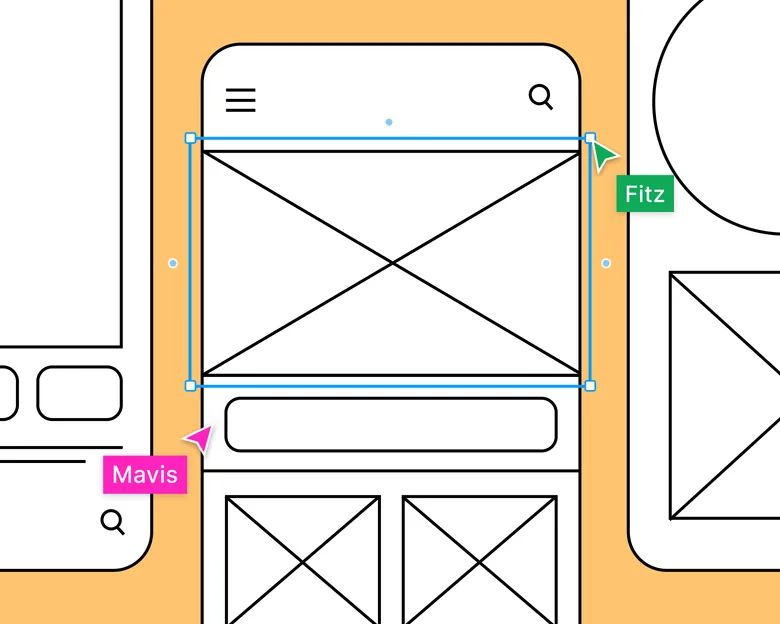
The workflow fit is clear: Figma belongs on the shortlist when collaborative interface design from wireframe to developer handoff is more important than having the broadest possible ecosystem.
Real-time collaboration, browser access, mature component systems, Dev Mode, and a huge surrounding ecosystem make it easy to bring product managers and developers into the same source of truth.
Where it fits best
Use Figma when collaborative interface design from wireframe to developer handoff. It is particularly useful when that need is already visible in your current workflow and the team can measure whether the tool actually removes a handoff, shortens iteration, or improves the quality of the artifact.
The tradeoff
Because it can do almost everything, it can also encourage teams to polish too soon. Specialized tools are often faster for rough ideation, complex interaction logic, or code-backed prototypes.
Current context: Figma reports that 95% of the Fortune 500 uses its platform, based on March 2025 data. Source
2. Sketch: Best for Native mac interface design with mature prototyping
Product: Sketch
Sketch remains a focused product-design environment for Mac-first teams. It combines reusable components, libraries, prototyping, and developer-facing web inspection without turning the interface into a general whiteboard or website builder.
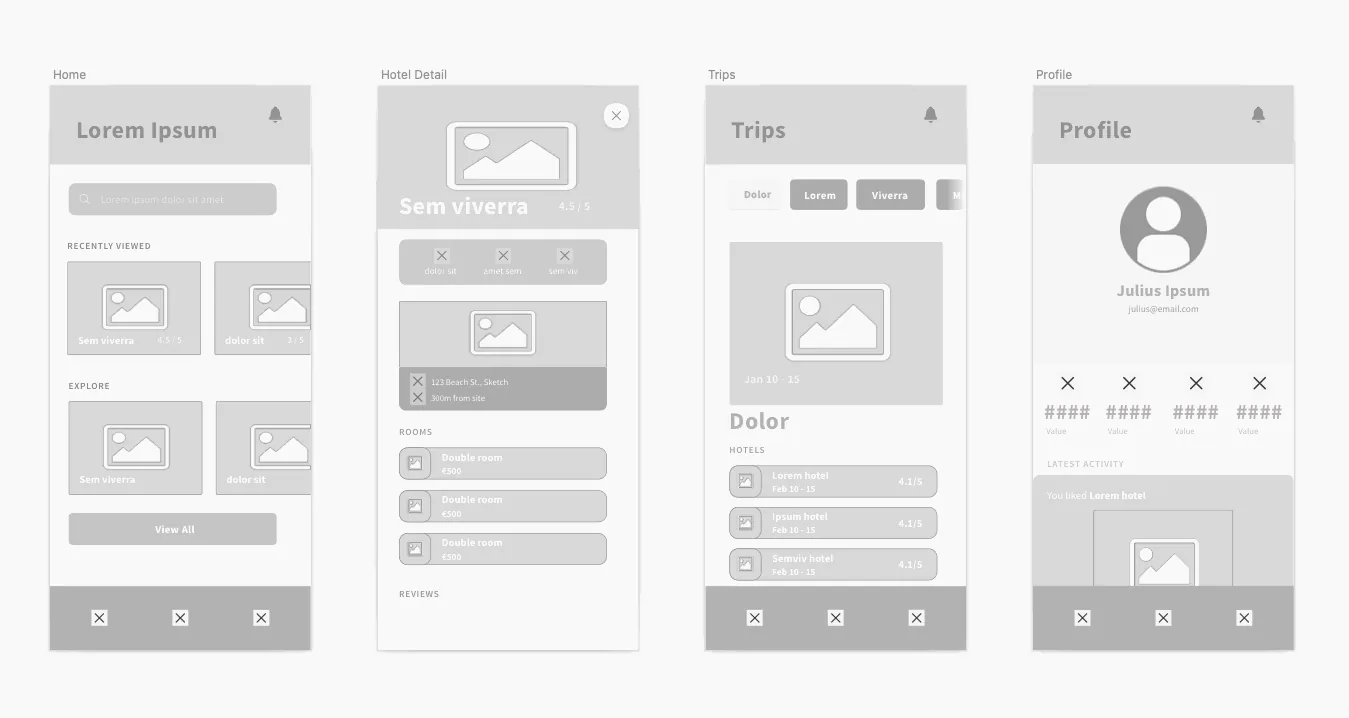
The workflow fit is clear: Sketch belongs on the shortlist when native Mac interface design with mature prototyping and handoff is more important than having the broadest possible ecosystem.
Designers who value a native desktop workflow, local files, and a mature Mac product can find it calmer than an everything-in-the-browser stack.
Where it fits best
Use Sketch when native Mac interface design with mature prototyping and handoff. It is particularly useful when that need is already visible in your current workflow and the team can measure whether the tool actually removes a handoff, shortens iteration, or improves the quality of the artifact.
The tradeoff
Designing still requires macOS, which makes it a poor default for mixed-platform teams. Browser collaboration helps reviewers, but the authoring environment is a deliberate platform choice.
Current context: Sketch currently requires macOS Sonoma 14 or newer for design work, while its web app supports viewing, inspecting, and commenting. Source
3. Penpot: Best for Open-source ui design, self-hosting,
Product: Penpot
Penpot is the strongest mainstream option for teams that want an open-source design platform rather than another proprietary design file. It runs in the browser, supports reusable components and prototypes, and can be self-hosted.
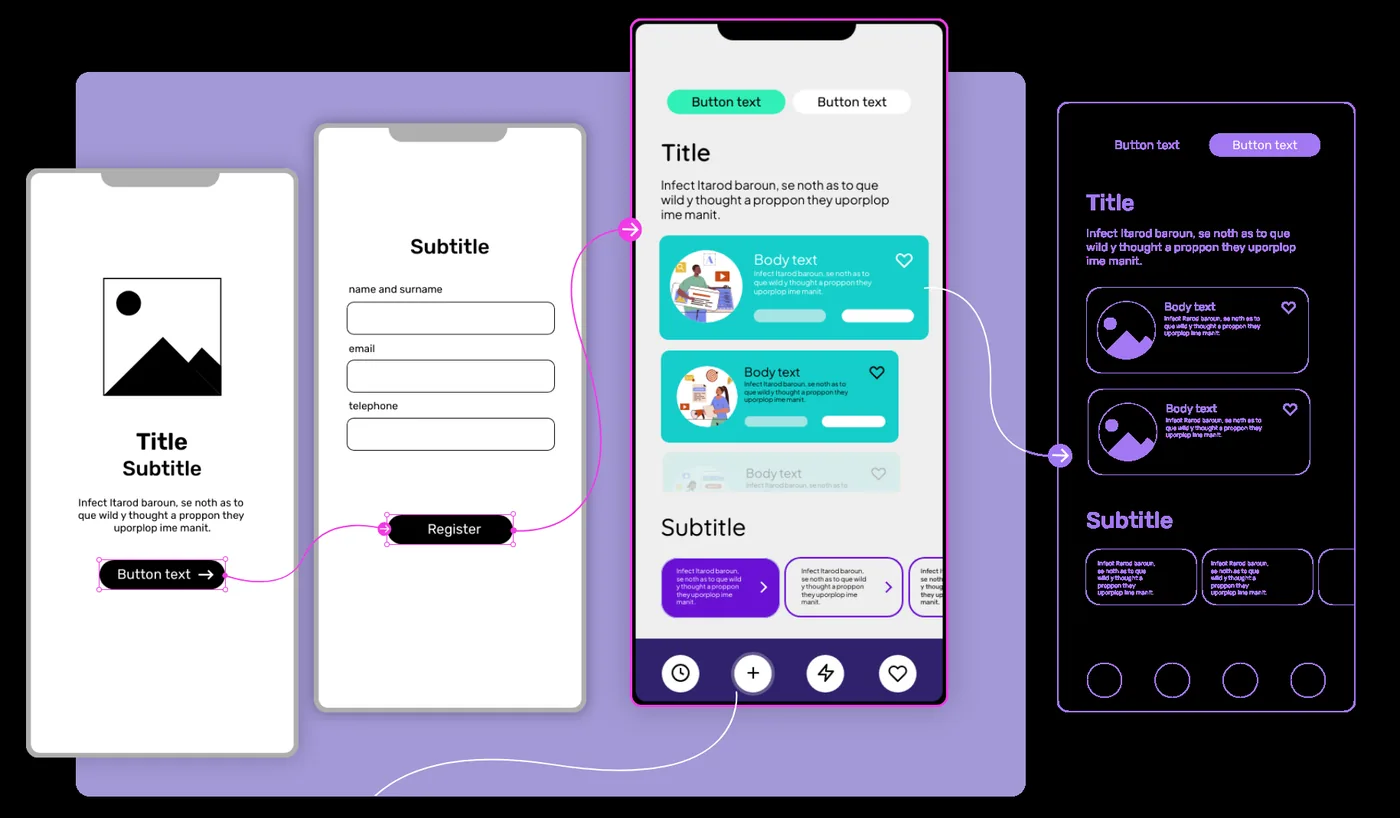
The workflow fit is clear: Penpot belongs on the shortlist when open-source UI design, self-hosting, and closer design-to-code alignment is more important than having the broadest possible ecosystem.
Its emphasis on web standards, CSS Grid, Flex Layout, tokens, and developer collaboration gives it a different center of gravity from Figma. Ownership and implementation structure are part of the product story.
Where it fits best
Use Penpot when open-source UI design, self-hosting, and closer design-to-code alignment. It is particularly useful when that need is already visible in your current workflow and the team can measure whether the tool actually removes a handoff, shortens iteration, or improves the quality of the artifact.
The tradeoff
The ecosystem is smaller than Figma’s, and some teams will miss the volume of templates, plugins, community files, and established workflows surrounding the market leader.
Current context: Penpot’s official media kit reports more than 1 million users and availability in more than 49 languages. Source
4. Framer: Best for Website design that can move directly into a responsive published site
Product: Framer
Framer is strongest when the artifact you are designing is a website and the team wants to shorten the trip from layout to live URL. Responsive design, CMS, animations, interactions, and publishing live in one environment, while AI can help generate starting structures.
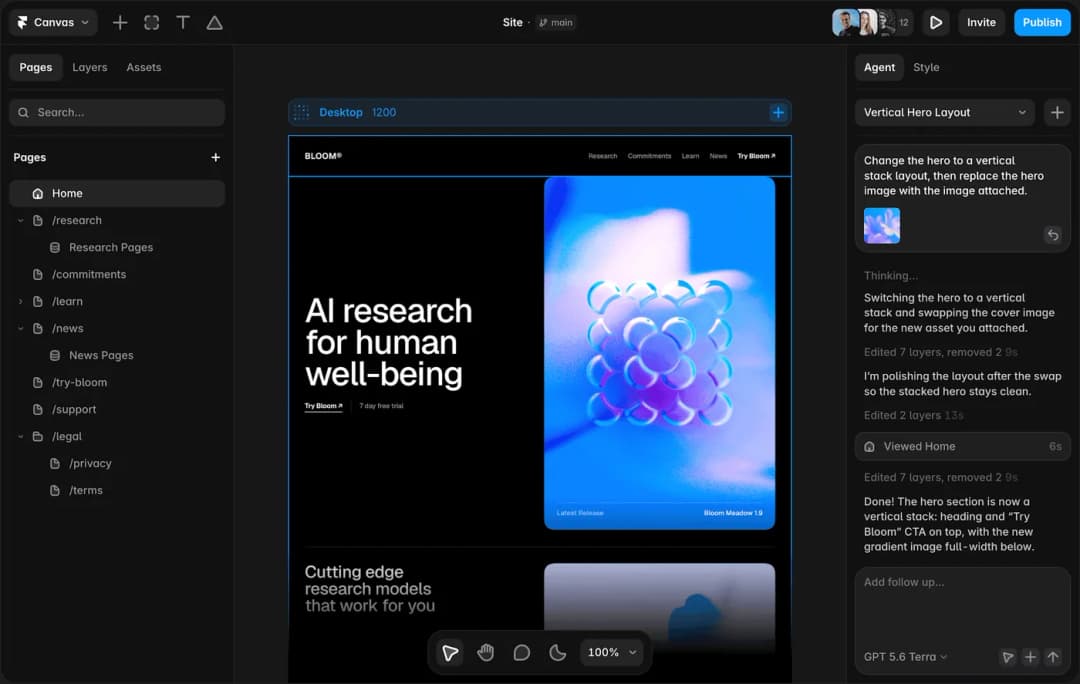
The workflow fit is clear: Framer belongs on the shortlist when website design that can move directly into a responsive published site is more important than having the broadest possible ecosystem.
The unusual advantage is that the design does not have to die at handoff. A marketing page or content site can keep evolving inside the same tool until it ships.
Where it fits best
Use Framer when website design that can move directly into a responsive published site. It is particularly useful when that need is already visible in your current workflow and the team can measure whether the tool actually removes a handoff, shortens iteration, or improves the quality of the artifact.
The tradeoff
It is website-centric. For large native applications, research-heavy UX work, or complicated enterprise interaction logic, it is usually better as a specialist rather than the main design platform.
Current context: Framer said in June 2026 that more than 188,000 companies across 200 countries were using the platform, powering more than 4 million published websites. Source
5. Motiff: Best for Collaborative ui design with ai-native assistance
Product: Motiff
Motiff is a modern collaborative interface design tool that competes directly with established screen-design platforms while building AI into common design tasks. It is aimed at teams that want professional UI design, components, prototyping, and developer collaboration in one environment.
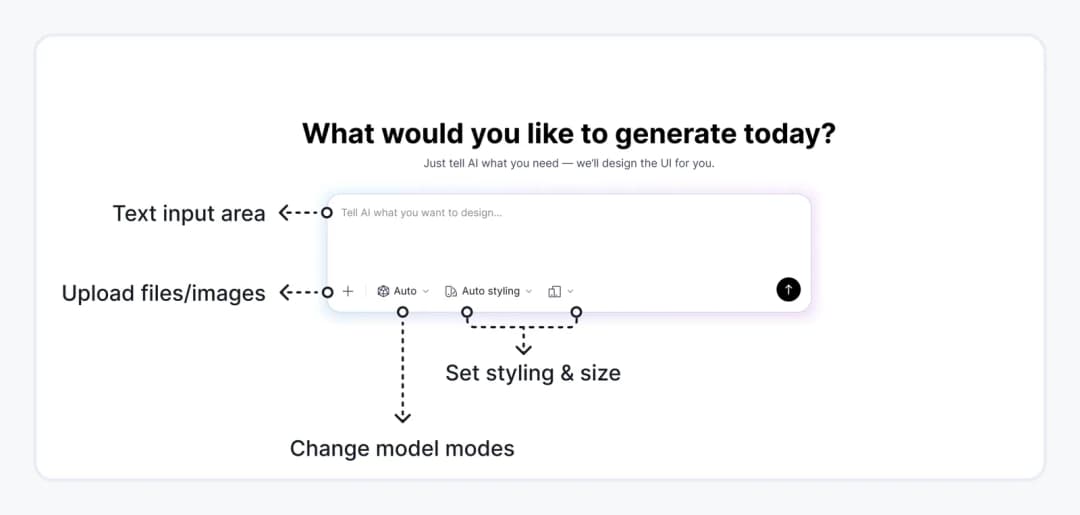
The workflow fit is clear: Motiff belongs on the shortlist when collaborative UI design with AI-native assistance is more important than having the broadest possible ecosystem.
The attraction is a familiar design-tool model with more AI assistance woven into the workflow, rather than a separate prompt-only generator that produces something you then have to rebuild.
Where it fits best
Use Motiff when collaborative UI design with AI-native assistance. It is particularly useful when that need is already visible in your current workflow and the team can measure whether the tool actually removes a handoff, shortens iteration, or improves the quality of the artifact.
The tradeoff
It has a younger ecosystem than Figma. Teams should evaluate plugin depth, design-system migration, and developer workflow before making it the default platform.
Current context: Motiff positions itself as an AI-powered professional interface design tool for collaborative product teams. Source
6. Lunacy: Best for Cross-platform ui design with built-in assets
Product: Lunacy
Lunacy is a desktop UI and graphic design tool from Icons8 with built-in graphics, icons, photos, and AI-assisted features. It is useful for designers who prefer a native app and want access to a large asset library without constantly leaving the workspace.
The workflow fit is clear: Lunacy belongs on the shortlist when cross-platform UI design with built-in assets and offline-friendly desktop workflow is more important than having the broadest possible ecosystem.
The practical benefit is self-containment. A lot of the supporting visual material that usually requires browsing stock sites is already close to the design canvas.
Where it fits best
Use Lunacy when cross-platform UI design with built-in assets and offline-friendly desktop workflow. It is particularly useful when that need is already visible in your current workflow and the team can measure whether the tool actually removes a handoff, shortens iteration, or improves the quality of the artifact.
The tradeoff
It has less team mindshare and a smaller professional ecosystem than Figma or Sketch, so collaboration conventions and handoff expectations may need more deliberate setup.
Current context: Lunacy is available on Windows, macOS, and Linux and integrates Icons8 assets directly into the design workflow. Source
7. UXPin: Best for Code-aware prototyping
Product: UXPin
UXPin sits between traditional design tools and production code. Its prototyping supports logic, variables, states, and interactions, while Merge can let teams design with real React components pulled from a development system.
The workflow fit is clear: UXPin belongs on the shortlist when code-aware prototyping and design-system work is more important than having the broadest possible ecosystem.
For organizations with an established component library, that can collapse the gap between what designers prototype and what engineers eventually build. The prototype uses the same component logic instead of a visual imitation.
Where it fits best
Use UXPin when code-aware prototyping and design-system work. It is particularly useful when that need is already visible in your current workflow and the team can measure whether the tool actually removes a handoff, shortens iteration, or improves the quality of the artifact.
The tradeoff
It is a more specialized choice than Figma. Teams without a mature design system or code-component workflow may not use enough of its advantage to justify switching.
Current context: UXPin Merge supports code-component workflows through sources such as Storybook and Git, depending on plan and setup. Source
Which One Should You Choose?
Choose Figma if your priority is collaborative interface design from wireframe to developer handoff. Choose Sketch if your priority is native Mac interface design with mature prototyping and handoff. Choose Penpot if your priority is open-source UI design, self-hosting, and closer design-to-code alignment.
Choose Framer if your priority is website design that can move directly into a responsive published site. Choose Motiff if your priority is collaborative UI design with AI-native assistance. Choose Lunacy if your priority is cross-platform UI design with built-in assets and offline-friendly desktop workflow. Choose UXPin if your priority is code-aware prototyping and design-system work.
Do not choose from the feature count alone. Pick the tool that removes the next expensive handoff in your workflow. If it only gives you a faster first draft but creates more cleanup later, the speed is mostly cosmetic.
FAQs
What is the best UI design tools for most teams?
For most teams, Figma is the safest starting point because it matches the central job of this list: collaborative interface design from wireframe to developer handoff. The better answer can change quickly when your team has a strong platform, code, or workflow constraint.
Are free UI design tools good enough?
Free plans are usually enough to test the workflow and judge first-result quality. The limits show up later in collaboration, AI credits, private projects, exports, version history, team controls, or production use. Test your real workflow before paying for a year.
Should AI replace the designer in this workflow?
No. AI is most useful for generating options, assembling first passes, translating structure, or automating repetitive edits. Problem framing, accessibility, product judgment, prioritization, and deciding which direction is actually right still need human ownership.
How should I evaluate these tools before buying?
Use one small real project. Give every candidate the same brief, the same existing assets, and the same correction request. Compare the second and third iterations, not just the first output. That exposes workflow friction much faster than a feature checklist.
Final Thoughts
The best UI design tools is the one that makes the next decision cheaper. For this list, Figma is the strongest default, but the specialist options become better as soon as your constraint becomes specific. Match the tool to the output, handoff, and level of fidelity you actually need. That is how you get speed without simply moving the work somewhere else.
If you want help turning UX decisions into a polished interface, Omnix Studio offers website UI/UX design and mobile app UI/UX design.